The Story Of Amar, The Man That Has Kept His Hand Up For Over 45 Years

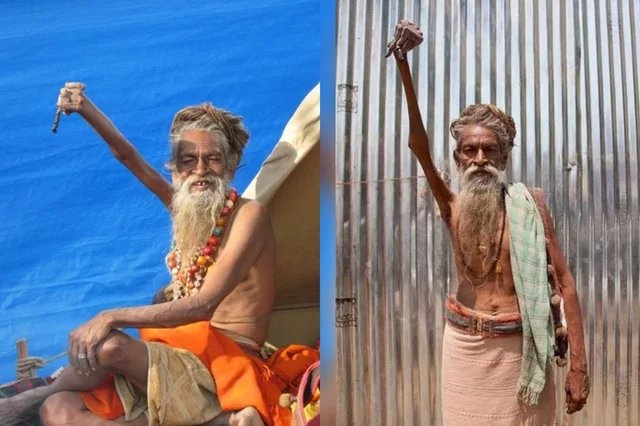
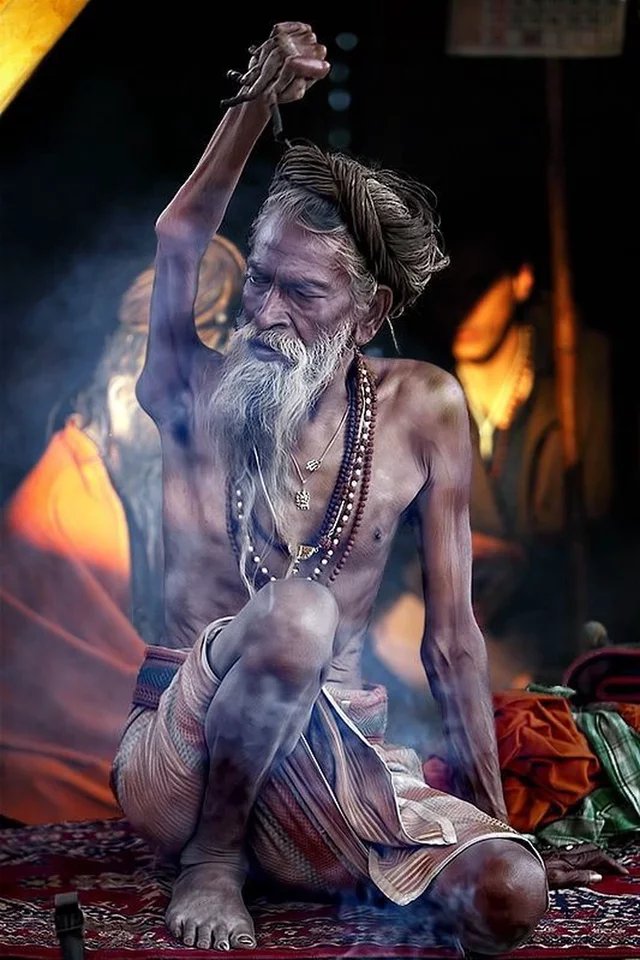
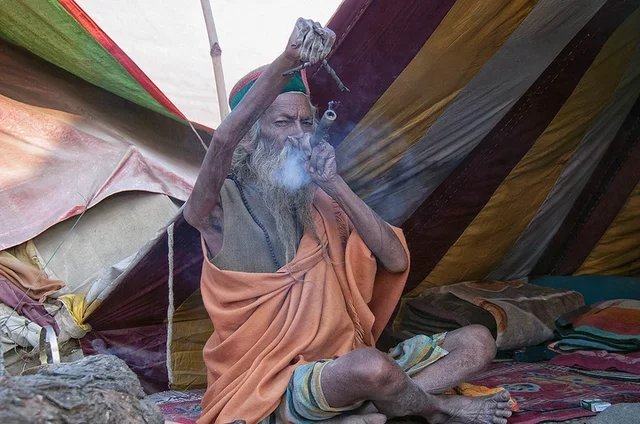
Amar Bharati is known as the Man whose hand has been raised for over 45 years. For a very long time Amar has held his right hand up in the air and has never brought it down for any reason.

According to history, Bharati used to work in a bank in India in the 1970’s. He was also married with a wife and they both had kids. One day Amar made a decision to leave his whole family, his friends and even his job.

He left all these behind to follow his calling as a Monk, he decided to live a holy life away from material things. Amar made a decision to dedicate his whole life to the hindi god called Shiv

It was not easy for Amar to be a monk at first, he was tempted to go against his belief many times. It was due to these temptations that Amar had to do something different to show his solidarity to the god Shiva.

In the year 1973, Amar decided that he would raise his hand up for the rest of his life. This act alone made him famous around the world and people came to see him.

Amar explained that the reason he keeps his hand up that way is because he is against war. He raised his hand up in the air to show that he wants world peace, and also to show respect to his god.

When Amar raised his hand for the first time, it was not a great experience for him. Even though he felt pain, he still did not bring down his hands from the sky. As years went by, Amar began to loose feelings in the band and the pain disappeared slowly.

The only thing that Amar wants is for everybody to stop the war and live in peace. Amar is still alive and holding up his hands as promised, he has also inspired alot of people to become monks just like him.

Quite alot of Monks have tried to hold their hands up for long, but nobody has been able to beat the record of Amar Bharti. He is still the only person that has been able to keep one hand up in the sky for years.

It would not be easy for Amar to bring down his hands, this is due to some health reasons and some spiritual reasons.
UEFA Champions League: Messi vs Ronaldo cancelled; PSG to face Real Madrid, Man Utd vs Atletico Madrid

Following the blunder that occurred earlier in the Champions League draw that was conducted, a new draw has been redone and it now means there will be no Cristiano Ronaldo versus Lionel Messi clash in the round of 16.

The re-draw now pairs Manchester United with Atletico Madrid while Paris Saint-Germain will face off Real Madrid.

Liverpool have been drawn against Serie A champions Inter Milan.

The new draw is as follows;

RB Salzburg vs Bayern Munich

Sporting CP vs Manchester City

Benfica vs Ajax

Chelsea vs LOSC Lille

Atletico Madrid vs Manchester United

Villarreal vs Juventus

Inter Milan vs Liverpool

PSG vs Real Madrid

FIRST REPORTS reports that the first draw was voided after a number of mistakes brought into question the integrity of the initial fixtures.

UEFA had confirmed the redraw, saying: “Following a technical problem with the software of an external service provider that instructs the officials as to which teams are eligible to play each other, a material error occurred in the draw for the UEFA Champions League Round of 16.

“As a result of this, the draw has been declared void and will be entirely redone at 1500 CET (2pm UK).”

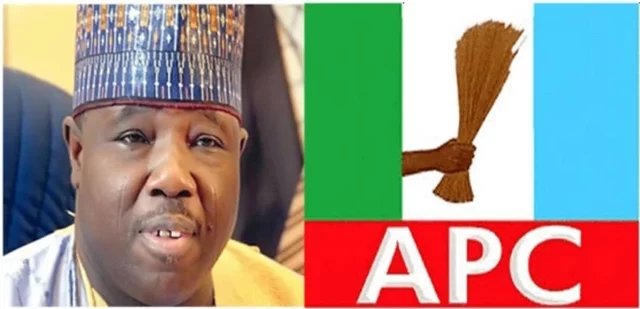
Ali Modu Sheriff May Emerge As APC Consensus Candidate

Ahead of its national convention scheduled to hold in February 2022, reports reaching Daily Independent has it that the leadership of the ruling All Progressives Congress (APC) is rooting for Senator Ali Modu Sheriff, former Borno State governor as its consensus candidate.

A credible source in the party said Sheriff’s ambition enjoys the support of the Caretaker/ Extraordinary Convention Planning Committee (CECPC) of the APC led by Governor Mai Mala Buni of Yobe State.

Aside Sheriff, other contenders for the chairmanship position are Tanko Al-Makura, George Akume, Kashim Shetimma, Mohammed Sani Musa, Danjuma Goje, Mallam Mustapha Salihu, Isa Yuguda, Abdulaziz Yari and Sunny Moniedafe.

On why the party prefers Sheriff ahead of other aspirants, our source said aside being a two-term Governor and senator, Sheriff’s experience as a former national chairman of the opposition Peoples Democratic Party (PDP) gives him an edge.

” From all indications, the APC does not want a rancorous national convention, therefore it is has decided to adopt a consensus candidate for the position of national chairman. Other positions may be contested for but that of the National chairman is always contentious”.

” So far, all the aspirants who have shown interest are well qualified. They are seasoned administrators in their own rights. But I strongly believe that the party leadership is disposed to Senator Ali Modu Sheriff who is from the North- Eastern part of the country in Borno state”.

” Aside being a former governor and senator, his experience as a former national chairman of the PDP gives him a clear edge over others. He will emerge as the consensus candidate”.

When Daily Independent contacted the Secretary of the APC Caretaker Committee, Senator John Akpan Udoedehe and put the question to him, he replied ‘ Please text me’.

Our correspondent replied him again with the question but he did not respond.

Credit: Daily Independent

In Decisive Action To Protect Nigeria’s Sovereignty, FG Set To Place UK, Saudi Arabia, Canada, Argentina On Red List

The Federal Government is set to take decisive actions to protect Nigeria’s Sovereignty by reciprocating the travel ban placed on the country by the United Kingdom, Saudi Arabia, Canada and Argentina, THE WHISTLER can authoritatively report
Top government sources confided in this Website that the decision to place a travel ban on these four countries will be announced on Monday by the Federal Government.

Last Saturday the British High Commission, Abuja issued a statement where it confirmed that it had put Nigeria on red list due to Omicron variant of COVID-19, as some Nigerians who returned to the UK were identified to have the variant after undergoing tests.

The implication of being on a red list is that only UK and Irish citizens and residents would be allowed to enter the UK, while others travelling from Nigeria would not be allowed, except on transit at the airside of the airport

Nigeria became the 11th country to go on the UK’s red list for international travel on Monday. All nations currently on that list are African.

Also, on December 9, the Kingdom of Saudi Arabia suspended all flights from Nigeria due to the the new Coronavirus variant, Omicron.

This is even as the Canadian government said on December 6 that it would no longer accept result of COVID test from Nigeria, Egypt, South and seven other countries on the continent

In bid to check the trend, it was gathered that a meeting was held by the Presidential Steering Committee on Covid-19 on Saturday to discuss the issue.

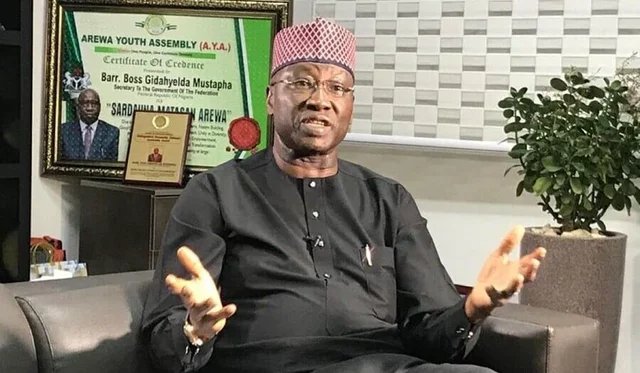
The committee is Chaired by the Secretary to the Government of the Federation, Mr. Boss Mustapha.

A top government source confided in this Website that a recommendation was made by the Ministry of Aviation to the Presidential Committee that the government should put these four countries on red list.

This means that the government will also place a ban on flights coming into Nigeria from these countries from next week.

The implication of this is that airlines coming from these countries into Nigeria such as British Airways, Virgin Atlantic, Emirates Airline, Lufthansa, and KLM among others will not enter Nigeria’s airspace.

The source said, “There is the case of Saudi Arabia who put Nigeria on the ban list, no visa and no travel and also Canada. So, today there was a zoom meeting by the COVID-19 Task Force which the Aviation Ministry participated and it gave its input that this is not acceptable to Nigeria.

“The Ministry recommended that canada, UK, Saudi Arabia and Argentina be also put red list as they did to us and if they don’t allow us to go into their country so who are they coming as airline to pick out of the country.

“So I’m very sure that in the next three days between now and Monday or perhaps Tuesday, all those countries will be put on red list from the PAC Task force on covid 19 and once they put them on red list, it means they are banned and airlines will also be banned. We are going through difficult moments but we have to do it in

Terrorists kidnap Imam, others in Sokoto, Borno

Soldiers, police foil separate attacks in Kaduna
Kamarudeen Ogundele, Balarabe Alkassim (Abuja), Abubakar Auwal (Sokoto), Misbahu Bashir, Olatunji Omirin (Maiduguri) & Mohammed I. Yaba (Kaduna)
Bandits have struck again in Sokoto kidnapping 11 persons, among them a Chief Imam, Aminu Garba, who was preparing to lead Juma’at congregational prayer at Gatawa Village in Sabon Birni Local Government Area of the state.

The Imam was kidnapped along with three others on Friday.

The kidnapping occurred on a day a high-powered delegation headed by the National Security Adviser, Maj. Gen. Ali Monguno (retd.), visited the state on a fact-finding mission.

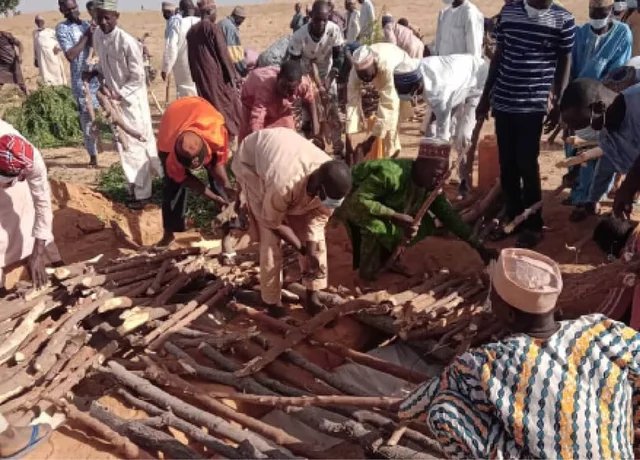
Before then, bandits had on Monday ambushed a vehicle at Gidan Bawa Village in the same local government, set it on fire and watched 23 passengers burn to death.

Two passengers who survived later died of the injuries sustained in the attack.

The assailants also yesterday blocked Sabon Birni-Gatawa Road, shot three persons and kidnapped seven others.

The member representing Sabon Birni South constituency in the state assembly, Sa’idu Ibrahim, who confirmed the attack, said the injured persons were receiving treatment at a hospital in Wamakko.

He said the leg of another woman who was shot at Dama Village was amputated because it could not be fixed.

When contacted, the spokesman of the Sokoto Police Command, ASP Sanusi Abubakar, said he would contact the officer in charge of the area and get back to our reporter.

He had yet to do so as of press time.

A former governor of Sokoto State, Attahiru Dalhatu Bafarawa has berated President Buhari over his failure to pay a condolence visit to the state after the killing and burning of travellers by bandits.

He said the president was treating the lives of the people that elected him as worthless.

Speaking to BBC Hausa Service on Saturday, Bafarawa expressed his disappointment over Buhari’s failure to address the growing insecurity and killings in Sokoto, Zamfara and Katsina states.

He said Sabon Birni, Shinkafi and Goronyo were in a dire situation.

“We only depend on God for protection. It is only on God that we depend for his protection, not anybody.

“We are sad and disappointed with the way Buhari’s administration is treating our region. I was governor for eight years and I know the responsibilities placed on me when I was the governor.

“The saying that security is everybody’s business is true, but the onus rests with the leader, like President Muhammadu Buhari who swore with the Qur’an to protect their lives,” he said.

ASUU to shutdown all public universities in Nigeria, releases date

The Federal Government has said it is still reviewing the implementation of the Memorandum of Understanding which it signed with the Academic Staff Union of Universities.

The Minister of Labour and Employment, Chris Ngige, stated this in an interview with our correspondent in Abuja.

ASUU had on November 15, 2021 given the Federal Government an ultimatum of three weeks over the failure of the government to meet some of its lingering demands.

The lecturers had also threatened to embark on another round of industrial action, following the unfaithfulness in the implementation of the Memorandum of Action the Federal Government signed with the union upon which the year 2020 strike action was suspended.

The National President of ASUU, Prof. Emmanuel Osodeke, in an interview with The PUNCH on December 5, 2021 lamented that despite the meetings with the minister of labour; only one of the demands by ASUU had been met.

When contacted by our correspondent, Ngige simply said the review of the MOU was in progress.

He said, “The plans are ongoing for the review of the implementation of the MOU. We will review the ones that have been met and the ones that have not been met.”

Meanwhile, sources on Friday told our correspondent that ASUU would decide whether to go on strike or not following the outcomes of its zonal meetings scheduled to end on December 15, 2021.

The sources who confided in our correspondent also shared a document which contained the breakdown of locations where the zonal meetings would take place.

Our correspondent noted that the meetings would span between December 9 and December 15 in Abuja, Nsukka, Ibadan, Yola, Benin, Akure, Lagos, Bauchi, Owerri, Port Harcourt, Calabar, Sokoto and Kano.

“The decision on whether to go on strike or not would depend on the outcome of the meetings from each zone”. The sources added.

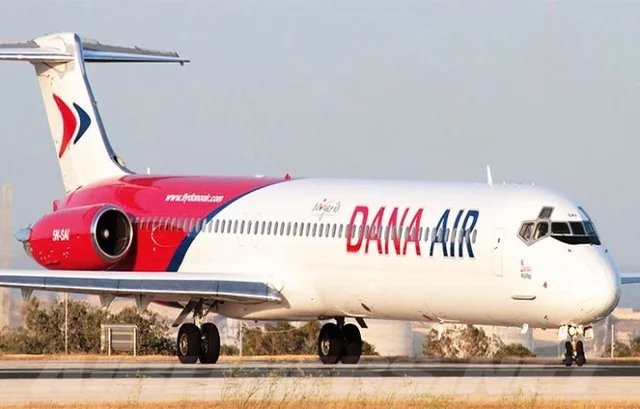
Fact -Check: Dana Air’s claim that fares on Asaba, Owerri, Enugu routes are N18,000 is deceptive

DANA AIR claimed on Friday that it had slashed airfares for passengers travelling from Asaba, Owerri and Enugu to Lagos to N18,000, but The ICIR’s fact-check shows that it is deceptive and misleading.
The price slash, according to Dana Air, was valid between December 11 and 31, 2021, according to a statement forwarded to our correspondent on Friday and a telephone interview with the airline on Saturday .

The airline revealed its decision to slash the airfares during a courtesy visit by AHS Aviation Handling Services Nigeria Limited to Dana Air’s newly appointed Deputy Chief Executive Officer Sukhjinder Mann.

As part of efforts to celebrate our customers this yuletide, we have introduced N18,000 flash sales for our customers travelling from Asaba, Owerri and Enugu to Lagos and this will be on till 31st December, 2021.”

The airline did not specify the class of airfare slashed to N18,000 but presented the information to the general public as if all classes could be booked at that rate.

The ICIR fact-check, however, shows that Dana flight from Owerri to Lagos for December 15, four days after the ‘flash price,’ goes as high as N32,400 for the economy class and N117,000 for the business flexible class.
For Asaba to Lagos flight on December 16, the price of economy class is N32,4000 with economy saver reaching N44,100 and business saver at N95,400.

Enugu to Lagos is not different. On December 15, economy class costs N40,500 while business saver is priced at N95,400

The only period the economy class is priced at N18,000, as found by our correspondent, is on December 22/23, with other classes also as high as the previous days.

The ICIR contacted the company to explain why its press statement on Friday contradicts what is on its website.

Speaking in a telephone interview, Dana Air Spokesman Kingsley Ezenwa said the price slash was on a first-come, first-served basis.

“The flash sales are expected to begin December 11 to December 31st. It is there in the press statement. You can check that. The price slash to N18,000 is for only 40- 50 per cent of the airline capacity after which the fare moves to the next class.

“It is only for economy and not business class. We could have put the fare at N23,000, but seats are far expensive than that. We slammed it on N18,000 to make everyone fly, not many airlines do that. We opened the slot to accommodate 40-50 per cent of the total bookings and it depends on when you book. If you are not smart enough, someone else would snatch up the offer just like how it goes for Jumia Black Friday where the flash sales are limited. When someone doesn’t meet the price at 18,000, they may think it is a scam,” he explained.

However, Dana Air did not provide these explanations to Nigerians on Friday. A woman, who gave her name as Miracle, a fashion designer and cook, expressed shock over that.

“I went to the website to book it myself on Saturday, but I saw different rates. The airline should just have explained all the details, but, maybe, left the details to attract customers. This is something a consumer protection agency should have taken up.”

ISSUES OF KIDNAPPING IN NIGERIA.

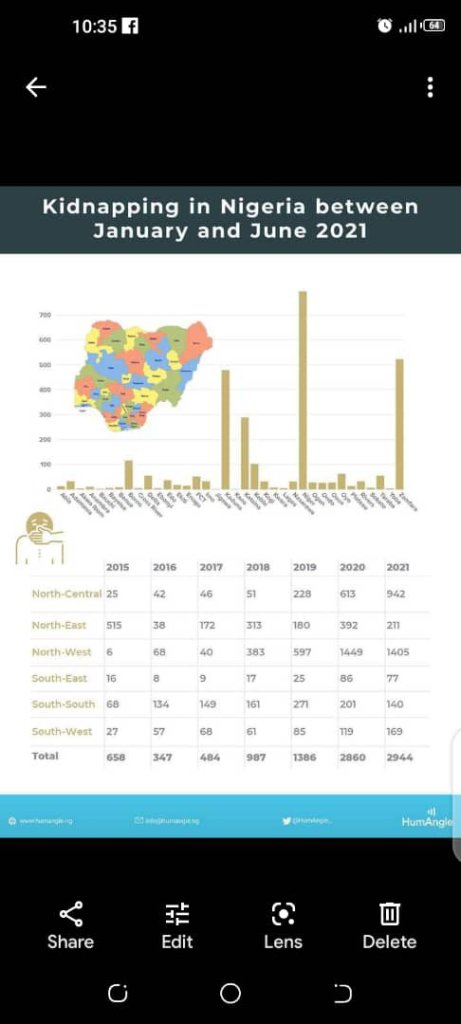
An average of 13 persons were abducted daily in Nigeria in the first half of 2021, according to a report by SBM Intelligence, bringing to 2,371 the number of persons kidnapped in the country within the first six months of the year. This came as the former senator representing Kaduna central, Shehu Sani said yesterday that the north-west would be a better place, if the Federal Government could deal with bandits with the same vigour used against secessionists.This is even as the abductors of the Emir of Kajuru, Alhassan Adamu, yesterday released the monarch but held on to his family members.On the number of people kidnapped in the last six months, the SBM report covered abductions from January to June.It indicated that a total of 2,371 persons were abducted across 36 states of the federation and the Federal Capital Territory, FCT.According to the report, N10 billion ($19.96 million as of June 30) was demanded as ransom for the kidnap victims.However, the report did not state the total amount paid.The highest number of kidnap victims, about 605, was recorded in February.This was closely followed by March with 534 kidnap victims; May, 355 kidnap victims; while April, January and June had 316, 284 and 277 respectively.Niger State, the hotbed of kidnappingThe report indicated that Niger State recorded the highest number of persons abducted, with 643 victims in 28 kidnap incidents, while 58 people were killed during the abductions.This was followed by Zamfara State with 519 kidnap victims in seven incidents, leading to the death of 22 people, while Kaduna State recorded 360 kidnap victims in 26 incidents, leading to the deaths of 41 persons.The kidnap victims in other states are as follows; Abia (6), Abuja (50), Adamawa (3), Akwa Ibom (2), Anambra (14), Bauchi (3), Bayelsa (7), Benue (6), Borno (1), Cross River (4), Delta (51), Ebonyi (5), Edo (18), Ekiti (14), Enugu (15), Gombe (1), Imo (25), Jigawa (2), Kano (3), Katsina (236), Kebbi (81), Kogi (31) and Kwara (10).Others include: Lagos (6), Nasarawa (44), Ogun (26), Ondo (17), Osun (23), Oyo (61), Plateau (10), Rivers (14), Sokoto (10), Taraba (46), and Yobe (4).Schools were often targeted in the abductions that took place in the first half of 2021, with hundreds of students taken hostage in the north-west.Reacting to the high incidents of kidnapping in the country, particularly by bandits, Shehu Sani, a former senator representing Kaduna central said, the north-west will be a better place if the Federal Government could deal with bandits with the same vigour used against secessionists.The north-west had been the hotbed of banditry in recent times, with over 500 students kidnapped in the region by bandits this year alone.The latest is the abduction of 121 students in Bethel Baptist Secondary school in Damishi, Chikun LGA of Kaduna State, on July 5. Less than a week later, the Emir of Kajuru and 13 members of his household were abducted at his palace.While bandits continue to wreak havoc in the north-west, security operatives have successfully clamped down on leaders of secessionist movements in the southern part of the country.“Abduction has become a daily tragedy in Nigeria, many even go unreported. Those that are reported are either mass abduction or the abduction of prominent people.

BORROWING ATTITUDE OF NIGERIAN GOVERNMENT


From Obasanjo to Buhari… how FG’s debt profile surged 658% to N26.9trn in 21 years

Nigeria’s public debt has been on the rise. Despite securing debt relief during the Olusegun Obasanjo-led administration, successive governments have continued on a borrowing spree — the federal government’s component of the public debt surging 658 percent to N26.9 trillion in the last 21 years.
This has raised concerns among Nigerians on the debt sustainability of the country amid dwindling revenue to meet the debt obligations to creditors.
Within two weeks, the senate approved three different loan requests by President Muhammadu Buhari.
On July 7, 2021, the upper chamber approved a loan request of N2.343 trillion, approximately $6 billion and another $8.3 billion and €490 million.
Defending one of the loan requests, the Debt Management Office (DMO) said it is part of a borrowing plan for the 2021 budget.
As of March 2021, Nigeria’s total public debt has hit N33.1 trillion ($87.24 billion) — an accumulation of borrowings from successive governments, of which most were borrowed since the return to democratic rule in 1999. 
The overall public debt is the total debt accrued by federal, states, and the FCT from local and international lenders.
Of the N33.1 trillion, the federal government alone borrowed N26.91 trillion — this includes the FGN bonds, Sukuk, green bonds and Euro bonds.
Finally, after weeks of data aggregation, number crunching, dissecting and analyses of freedom of information (FOI) response from the Debt Management Office (DMO), TheCable presents findings that highlight how Nigeria’s aggressive borrowing defies its fiscal responsibility laws.
The analyses also include data from the DMO, National Bureau of Statistical (NBS), and fiscal papers from the Budget Office of the Federation.
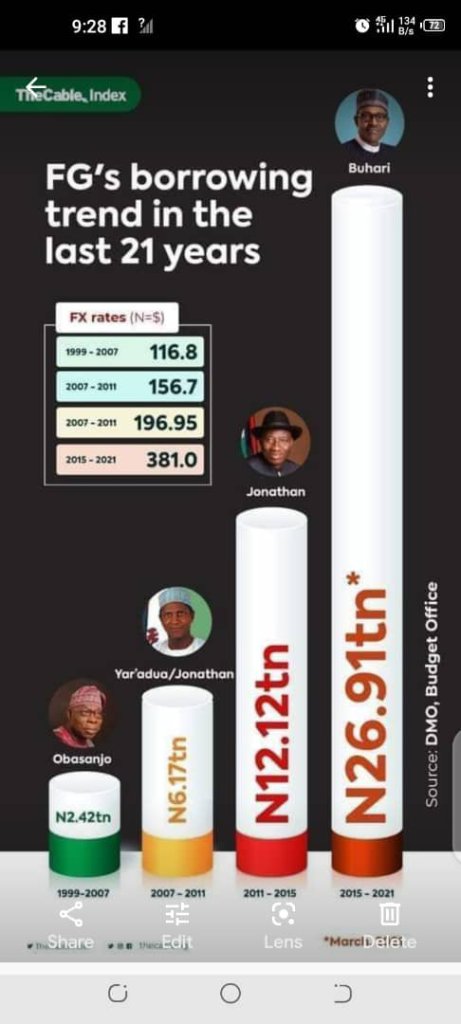
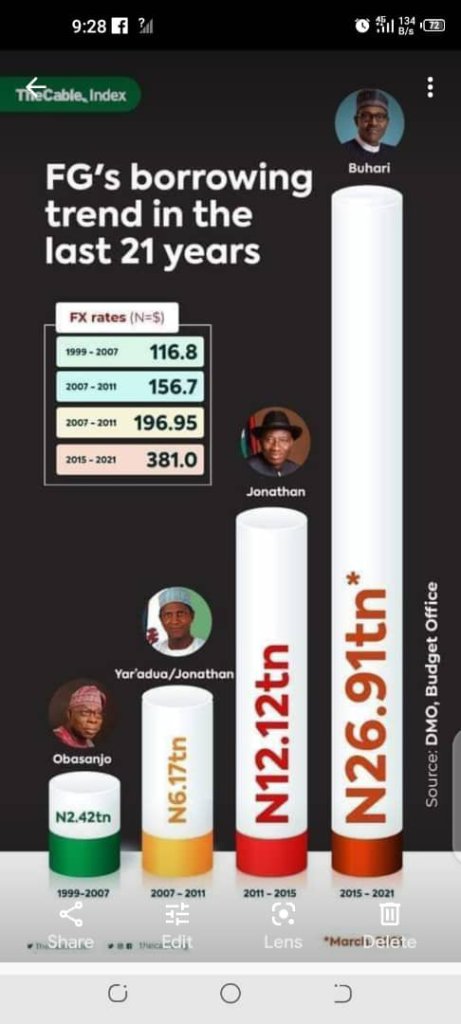
FG DEBT CLIMBED 658% TO N26.9 TRILLION IN 21 YEARSData from the DMO seen by TheCable showed that federal government borrowings (local and foreign debt) climbed from N3.55 trillion in 1999 to N26.91 trillion at the end of March 2021 (the country’s latest official figure).
This represents a 658 percent increase in 21 years, comprising the administrations of Olusegun Obasanjo, Umar Musa Yar’Adua, Goodluck Jonathan, and the current Muhammadu Buhari.
The Budget Office’s medium-term expenditure framework and fiscal strategy paper from 2015 showed that the Buhari-led administration incurred N7.63 trillion in domestic debt from June 2015 to December 2020.
On external borrowings, President Buhari increased debt from $7.3 billion in 2015 to $28.57 billion as of December 2020. This means that the president incurred $21.27 billion on foreign loans to the country’s debt portfolio. 
The country’s exchange rate moved from N197 to a dollar in 2015 to N381 at the end of December 2020.
Analysis of consolidated debt showed that the external debt increased by 291.37 percent while domestic debt grew by 86.31 percent in the last six years of the Buhari government.
Overall, the Buhari-led government has had an accumulated debt of N17.06 trillion as of March 2021, using the N381 exchange rate. This represents a 173.2 percent increase from when he was elected president in 2015.
UNDER JONATHAN’S ADMINISTRATIONAt the beginning of former President Goodluck Jonathan’s tenure in 2011, the federal government had an accumulated debt of N6.17 trillion.
Analysis of the debt figure showed that local debt amounted to N5.62 trillion while foreign debt stood at $3.5 billion (about N548.65 billion, using the exchange rate of N156.7/$1).
By the end of 2015, the foreign debt component hit $7.3 billion, while domestic debt increased by N8.4 trillion. The country’s exchange rate also stood at N197/$1. 
Overall, the federal government component of the total public debt increased from N6.17 trillion in 2011 to N9.8 trillion in 2015, representing an increase of N3.63 trillion or 58.8 percent.
YAR’ADUA/JONATHAN’S BORROWINGS
Under the Umar Musa Yar’Adua/Goodluck Jonathan-led government between 2007 and 2011, domestic debt of the federal government moved from N2.17 trillion to N5.62 trillion. The foreign component of the debt also increased from $2.11 billion to $3.5 billion within the period.
The country’s exchange rate also moved from N116.8/$1 to N156.7/$1.
The combined debt profile increased from N2.42 trillion to N6.17 trillion in four years, representing a 155 percent jump. 
Of the debt figure, Jonathan completed the tenure from May 2010 to May 2011 after the death of Yar’Adua. The period saw a surge in the federal government’s debt from N4.94 trillion to N6.17 trillion. This represents a 24.9 percent increase in one year. 
OLUSEGUN OBASANJO’S TENUREDuring the tenure of former president Olusegun Obasanjo, the debt level of the federal government reduced from N3.55 trillion in 1999 to N2.42 trillion at the end of 2007.
The 8-year term of Obasanjo resulted in a dip in FG’s local and foreign debt level, representing a 31.8 percent decline.
The country’s exchange rate was between N98.02 to N116.8 to a dollar during the tenure.
Analysis of the figures showed that external debt decreased from $28.04 billion by 1999 to $2.11 billion at the end of 2007. However, the domestic component increased from N798 billion to N2.17 trillion within the same period.
The huge decline in foreign debt was a result of the substantial reduction following the pay-off of the outstanding debts owed to the London Clubs of Creditors in the first quarter of 2007.
So far, Buhari is the country’s biggest borrower, increasing public debt (FG component) by more than 173 percent. Next to the Buhari government is the Yar’Adua/Jonathan administration with a 155 percent surge in borrowing.
Last year, the government exceeded the fiscal borrowing threshold as stipulated in the fiscal act. 
In 2020, the country’s budget deficit was at about four percent of GDP, clearly breaking the law.
Also, Nigeria’s borrowing limit as a percent of GDP stood at 34.8 percent in 2020, well above 25 percent for the year. Earlier this year, the federal executive council (FEC) had strategically raised the borrowing limit to 40 percent in its Medium-term debt management strategy for Nigeria for the period 2020-2023. 
In the last four administrations, only Obasanjo’s team reduced public debt; his government recorded a 32 percent decline.
“The government is borrowing more, spending more and earning less revenue. For context, the government budgeted about N5.37 trillion in revenue in 2020 but only earned a total of N3.42 trillion,”
“Debt has risen N33.1 trillion as of March 2021, an increase of 162.7% in the space of about five years

THE PLIGHT OF GIRL CHILD IN THE SOCIETY

The Nigerian girl, a vuluerable individual, is widely exposed to a range of abuses and harmful traditional practices in the society especially in the northern region.

Girls in Northern Nigeria suffer more compared to boys in terms of missing out in education, abuses and harmful traditional practices. A report shows that in the North East only 41 percent of eligible girls receive primary education while 47 percent receive it in the North West which is greatly caused by society attitude.

A plight is unfortunate situation, danger, risk,peril faced by a young female human. The girl child has suffered a lot in the society due to the circumstances that surrounds the gender. A national survey was carried out and it was discovered that six out of 10 girls child reported having suffered one or more forms of violence before reaching 18 years of age, with 70 percent of those experiencing multiple incidents of violence from their parent, guidances and housemate.

Nigeria has the lastest number of child brides in Africa. Approximately 23million girls and women were married as children. Insecurity in Northern NIgeria also contributes significantly with millions displaced by Boko Haram and bandit in some part of Borno, yobe, adamawa, zafara and sokoto state.
GIRL CHILD PLIGHT