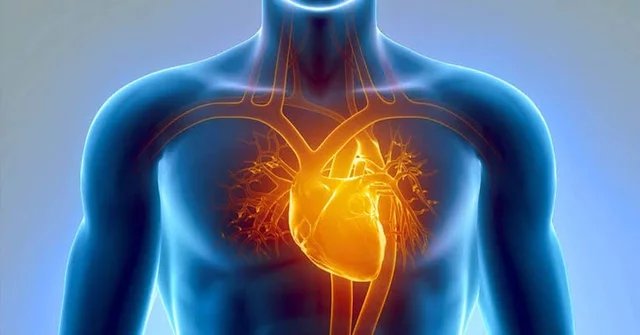
Heart diseases are the most deadly diseases in the world today. Some of these diseases are triggered by the lifestyle we live.
Urbanization and industrialization have given rise to lifestyle changes which have brought its own challenges. Some of the challenges of the new lifestyles are the heart diseases.
What are the habits that may lead to heart diseases? That is what we want to discuss in this article.
Fast foods.
Eating most of your food in restaurants or fast food centers could raise your odds of getting heart diseases. This is because of high sodium or sugar content of these foods. TAP HERE TO CONTINUE READING
Salty snacks.
Eating salty snacks such as potatoes chips or plantain chips or salty biscuits could raise your odds of getting heart diseases.
White Bread.
You may not know how much salt and sugar are in white bread. Studies have shown that much sugar, and salt are in white bread.
Foods that do not have much fiber can also increase your chances of getting heart diseases. This is the case with white bread.
Pizza.
All pizza are loaded with sodium. Sodium and sugar is not good for your heart except in moderation. So pizza is not be good for your heart.
Frozen foods.
Foods frozen in your house are not dangerous but according to CDC, many commercially frozen foods contain a lot of sodium.
6.Canned soups.
Canned soups may also contain too much sodium. It is better to make your soup at home, so that you will be sure of the ingredients used in preparing it.
Canned tomatoes or sauces.
The major problem with canned tomatoes and tomato sauce is sodium content. Use more fresh tomatoes and only add a little of canned tomatoes if you wish.
Canned meats.
Canned meats such as ham, hotdogs, sausage and corned beef may also contain too much sodium and saturated fats. They are not good for your health.
Alcohol.
Moderate consumption of alcohol may not be bad, but taking more than two drinks a day for men and one drink a day for women is dangerous as it may cause high blood pressure.
Condiments.
Some of the food condiments we use are not good for our heart. For instance salad dressings. Salad dressings may contain trans fats which are not good for the heart, instead use lemon juice, olive oil or prepare
As many as 45,000 people may have died from the mRNA shots being given to halt COVID, according to prominent physician Dr. Peter McCullough.
And teenagers — especially boys — are more at risk from being hospitalized from the vaccine than they are for COVID, he said. The culprit is myocarditis, inflammation of the heart. McCullough should know. He wrote the book on cardiology . Literally. Published more than 650 times in medical journals, editor of a cardiology journal, author of a cardiology textbook, as well as being an internist and qualified in public health, McCullough is critical of government response to the COVID pandemic.
McCullough’s background has included serving on review teams for new vaccines, so he was surprised at what happened in early 2021 when the COVID vaccines were rolled out.
“I chaired data safety monitoring boards … a couple dozen times — I know what I’m talking about,” McCullough said.
“I’ve shut down, with my committees, big pharma programs … I mean, huge pharma programs.”
But things were handled very differently for the COVID vaccines, and McCullough called FDA actions “reprehensible and reckless.”
Under normal circumstances, when officials learned on January 22 of this year that there had already been 182 deaths following 278 million shots, the vaccine program would have been halted, McCulloch said recently on the DarkHorse podcast of scientist Bret Weinstein. “Our [COVID] vaccine program would have been shut down in February for excess mortality in America,” he said.
McCullough said the shutdown should have been similar to the 1976 suspension of nationwide voluntary vaccination for the swine flu following only three deaths and 94 cases of paralysis due to those shots. He said there are major risks with the COVID shots, especially for old people.
“We now know it’s the seniors who die with the vaccine … 50 percent of these deaths occur within 48 hours, 80 percent within a week,” he said.
“There’s nursing home studies from Europe and Scandinavia. They show — when they actually review the charts there in the seniors — at least 40 percent, the doctors have concluded, are directly due to the vaccines.”
McCullough said patients suffered “severe reactions, fever, chills, nausea, vomiting, blood pressure dropping and then death within a day or two, whether it’s basically a cardiopulmonary collapse due to overwhelming production of the spike protein or a thromboembolic or bleeding death a few weeks later.
“But they are clearly biologically related to the vaccines,” he said.
There’s also risk to young people, according to McCullough, noting that some obituaries for young adults are listing vaccination as the cause of death.
Then there are the side effects. Even the Food and Drug Administration agrees there is a link between myocarditis and the shots. “It was in younger children — it was serious! Ninety percent required hospitalization,” McCullough said. The FDA and CDC recognized 200 myocarditis cases in June, but the total has since jumped to 11,000 certified cases in the VAERS [Vaccine Adverse Event Reporting System] system, the U.S. database which tracks vaccine-related deaths and injuries. The myocarditis cases affect boys more than girls and “the real rate of myocarditis is at least 50 percent greater than what the [Centers for Disease Control] ever projected,” McCullough said, adding that children age 12 to 17 are more likely to be hospitalized for myocarditis than for COVID.
When Weinstein noted the vaccine mandates , the bullying , the stigmatizing of the unvaccinated, the demise of civil liberties and general ignorance of myocarditis, McCullough responded that, in general, people are willing to do what it takes to stop COVID. “But people aren’t willing to sacrifice their life for this.
“And that’s what they’re being asked for; they’re being asked to … take a vaccine, and even though it’s rare, you could lose your life and then people are saying, ‘Well, how rare is rare?’ and I can just tell you, the mortality rate by all expert analyses is unacceptably high.
“We’re at 18,000 people in the CDC U.S. VAERS; about half of those are domestic — Americans — that have died with the vaccine.
“There is very good work done with the CMS [Centers for Medicare and Medicaid Services] data suggesting the underreporting factor on this is about five, so if you take 9,000 times 5, we currently are at some number that is, you know, 45,000 – 50,000 [American deaths]. And that’s conservative. It could be greater than that.”
People are becoming aware of what’s going on, according to McCullough. “People are walking away from their jobs because they know they could die with the vaccine.
“Once the word got out that people could die after the vaccine — in fact, deaths were occurring in large numbers — that was by mid-April … Rates of vaccination plummeted in mid-April. They absolutely plummeted.
“The word got out. It doesn’t matter what was on Twitter or on major media, people were talking to one another — everyone knew.
Yet, despite ongoing media and political alarmism, the COVID crisis is over , McCulloch said. That’s because 80 percent of children in the U.S. already have had COVID. And they and everyone else who has had COVID are protected by natural immunity.
“And now the CDC in the last week has acknowledged that they don’t have a single case of someone who has recovered from COVID getting it a second time and passing to anyone.
“So it’s basically over with.”
McCullough cited a preprint study posted in September at clinicalnews.org, that, while not yet peer-reviewed, supported his observations regarding vaccinated teens. It noted “a 4-fold increased risk of postvaccination myocarditis in those who had previously been infected” with COVID.
The report said it had been assumed that risks of COVID would outweigh risks of vaccination in 16- to 17-year-old boys, but the study found just the opposite. The report “predicted excess cases of vaccine-associated myocarditis/pericarditis would exceed COVID-19 hospitalizations and deaths under the ‘worst case scenario.’”
Also, risks of myocarditis weighed heavily on males, with boys aged 12-15 having myocarditis rates of 162.2 per million compared to 13 cases per million for girls aged 12-15. Boys aged 16-17 had 94 cases per million compared to 13.4 cases per million for girls of that age, the clinicalnews.org study said.
Diamond In The Rough: 18-year-old Bus Conductor Who Lives Under Oshodi Bridge Emerges Winner Of Chess, Mental Maths
The adage that says “a book should not be judged by its cover”, has played out in the life of a bus conductor Adeoye Fawaz in Lagos. Fawaz, an 18 year old boy who works as a bus conductor and has spent years of his life under Oshodi bridge emerged as overall champion in both chess and mental maths at a tournament held in Oshodi, Lagos.
The tournament is the brainchild of Chess In Slums Initiative, an organisation dedicated to engaging children and other young people living in slums.
Adeoye had revealed that he wanted to become a comedian and musician but works as a bus conductor now.
Heart disease is one of the most prevalent diseases that affects Nigerians and this is mostly because of negligence or ignorance of the risk factors that can predispose us to them. The fact is, what we eat can either cause heart problems or help prevent it. In this article I will highlight 3 major causes of heart disease and two local foods in Nigeria that can help fight or manage it.
There are numerous Heart diseases and most of them are tied to a group of risk factors which if carefully and meticulously avoided can go a long way in helping to prevent the onset of any heart disease. T A P HERE TO CONTINUE READING
The first cause of heart disease is high level of cholesterol in blood. Accumulation of cholesterol molecules within the walls of your blood vessels can lead to occlusion of blood flow which can consequently lead to increased blood pressure and coronary artery disease which can cause several heart disease or problems like myocardial infarction, angina, congestive heart disease etcetera.
Diabetes. High levels of sugar in the blood can lead to damage of your blood vessels which can lead to heart diseases including those mentioned above. Although the pathogenesis is not clear, but it is linked with the high level of blood cholesterol associated with high sugar level in the blood.
Now that we’ve mentioned the causes of heart disease, let me tell you about local foods that can help fight it.
Beans. Whether as beans soup or beans porridge, the soluble fibre content in beans goes a long way in helping to control the level of sugar in the blood which as we’ve mentioned already is implicated in the onset of heart diseases in diabetics.
Hence, instead of consuming large amounts of foods such as junks, you should consider going local with beans soup or porridge which is more healthier.
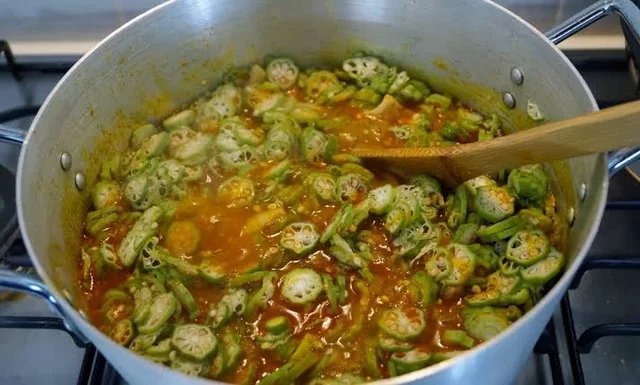
Okra Soup. Okra is a perfect food for those seeking to reduce their blood levels of cholesterol as it is scientifically believed to contain a substance known as pectin which helps to reduce the level of cholesterol in your blood.
Operatives of the Nigeria Security and Civil Defence Corps (NSCDC), Kwara State Command, have arrested a security guard, Jacob Obomerelu, for allegedly having canal knowledge of his 18-year-old daughter .
Spokesman of the NSCDC in the state, Babawale Afolabi, disclosed that the incident occurred on Monday, December 6, 2021, at the 47-year-old suspects’ workplace, 24, Awolowo Street, Tanke area of Ilorin metropolis, which also serves as his residence.
Afolabi said; “On Tuesday 7th December 2021, we were tipped off by one Alhaja Mariam Bello, who claimed that Modupe who happened to be her adopted daughter was raped by her biological father.
“Alhaja Mariam Bello added that the victim used to live with her at her Isale Gaa Akanbi residence but moved out to stay with her dad after a minor misunderstanding between her and the victim.”
Babawale further disclosed that Modupe had a minor misunderstanding with Alhaja who adopted her in 2017 when her mother separated from Jacob and since then was staying with the woman.
He said, “the victim joined her father in the gatehouse where he was working as a security guard and it was during the night of her first stay with her father that the incident occurred.”
The victim, Modupe narrated in her statement, how she begged her father not to rape her, but all her pleas fell on deaf ears and he later gave her N1,000 to buy drugs to flush her system.
In his confessional statement, Jacob, a father of four who hails from Edo State, admitted to the crime but blamed it on the devil as he was not really aware that he was doing it.
The spokesman said the NSCDC Commandant, Iskilu Makinde, has been briefed on the incident and the suspect will be charged to court after the completion of ongoing investigations.
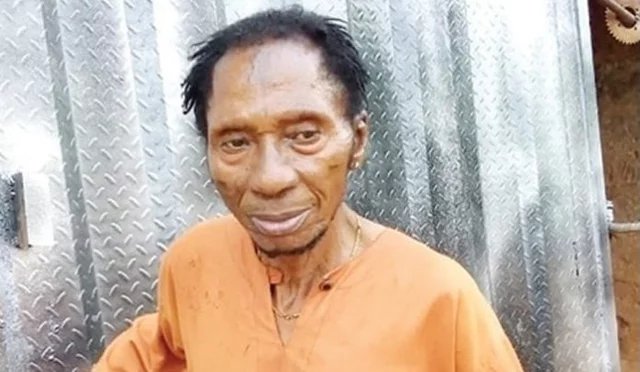
Mr Simon Odo, a native doctor popularly known as ‘King of Satan’, who married 59 wives with over 300 children and grandchildren, is dead.
The late Odo, who hailed from Aji in Igbo-Eze North Local Government Area of Enugu State, died in the early hours of Tuesday after a brief illness.
Mr Emeka Odo, one of the sons who confirmed the death of his father in their family house, saying he died at the age of 74.
Odo said burial arrangement for his father was already in progress in compliance with his father’s instruction to the wives and children that his remains should not be deposited in mortuary when confirmed dead, but should be buried as soon as possible.
“We are having family meeting to perfect arrangement for his burial since he instructed us not to put his body in mortuary,” he said.
He lamented that the death of his father was a big blow as he had a loving and caring father in spite of the large number of family members.
“Since this morning my father died kinsmen, friends and well-wishers have been trooping in shock and surprise to come and sympathise with our family,” he said.
Group Managing Director of the Nigerian National Petroleum Corporation (NNPC), Limited, Malam Mele Kolo Kyari, said on Monday that the high price of Liquefied Petroleum Gas (LPG), otherwise known as cooking gas, was a reflection of the rising price of crude oil and its derivatives at the international market.
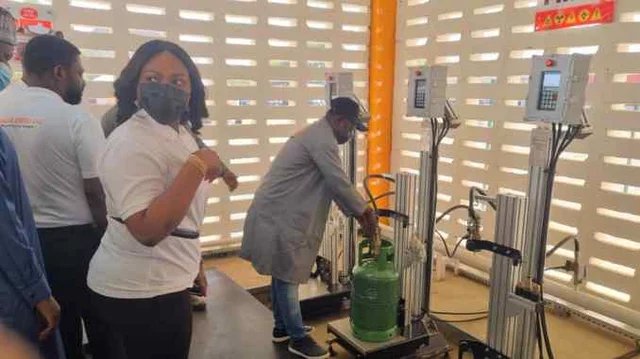
Kyari gave this explanation while speaking with reporters shortly after inaugurating Emadeb Energy Services Limited’s 120MT LPG Storage and Bottling Plant in Abuja.
He, however, assured Nigerians that the NNPC Limited was working round the clock to boost the supply of LPG to ensure a crash of the price that has apparently soared almost out of reach of a vast majority of Nigerians using the product for cooking.
Residents of Abuja now spend between N8,500 and N9,500 to refill their 12kg gas cylinders. The price hitherto was between N4,000 and N6,000.
The soaring price, according to Kyari, would soon crash once the NNPC raised its supply of the product even as he pointed out that the corporation was working hard to boost its supply.
Kyari said:“Two things are at play; one is the supply and the other is the international price of gas. It (price) moves with the price of every other petroleum product including crude oil and its derivatives. So, it is a reflection of what is happening in the international market.
“What we are doing is to increase supply. Once supply is increased the prices will come down.”
According to the NNPC GMD, the newly-inaugurated LPG plant was going to “reduce the cost of energy for Nigerians for the fact that LPG is cheaper than any other product you can think of, especially as cooking fuel.”
He commended Emadeb Energy Services Limited for building the LPG plant in Abuja, explaining that the project aligned with and fitted into one of the steps the Federal Government had taken to provide gas for its citizenry.
Kyari was upbeat about the company’s plan to, within the next 12 to 18 months, build a similar plant in six different locations countrywide, pointing out that the company had gone into these ambitious ventures in line with President Muhammadu Buhari’s decade of gas initiative.
He said: “We are aware that a lot of institutions and companies are doing this across the country. We are selecting this in line with Mr President’s objectives to make this the decade of gas.”
The NNPC boss also stated on the occasion that one of the many ways investors could key into the decade of gas initiative was to have facilities like this for auto-gas conversion, and also to ensure that LPG is easily accessible by the people.
According to him: “We think this is a very nice step. This company has promised to make six of these facilities available within the shortest period of time. Ultimately, we know this will serve the people within this area. We are expecting more Nigerians companies to come into this.”
Kyari also noted that the global energy transition had made the investment climate very ripe for gas even as he assured those investing in LPG project that the NNPC would guarantee supply of gas to their facilities.
Read him: “We know that the investment climate is very ripe for auto-gas and auto fuel, especially in terms of LPG as a transition fuel globally. So, we know that this is a big market for Nigerian companies and this is one of the great companies (referring to Emadeb Energy Services Limited) that we have around.
“As NNPC, we will come in and we will guarantee supply. That is very important for us as a business. As you are aware, we are NNPC Limited in Nigeria and we also have to make money for Nigeria. We will be there in the upstream to provide the gas.”
He continued: “The gas will be available through many of our initiatives, including all the trucklines we are trying to put in place. So, gas will be available to these companies and entities. Also, we can share data with them around customers and how we can deliver gas to our customers.”
Shortly before inaugurating the plant, Kyari had expressed satisfaction that numerous partners were keying into government’s aspirations of providing cheaper gas for the country, pointing out that the development would culminate in tapping from the enormous gas resources in Nigeria.
Kyari said that this would also lead to extensive domestic utilization of gas and export of the product as well as result in energy security, peace and prosperity of the country.
He urged Emadeb Energy Services Limited to count on NNPC’s support in terms of supply and provision of information to promote business investments in the country.
Chief Executive Officer of Emadeb Energy Services Ltd, Mr Debo Olujimi, said that although the capacity of the plant was currently 120MT, plans were afoot to expand it to 240MT in the next 18 months.
He described the business of gas infrastructure as capital intensive, and urged the federal government to encourage private investors to get value for their money.
Olujimi noted that: “There is a lot of value in gas. Everybody knows that gas is the way forward and the way it is, there is much gas with the decade of gas and with over two trillion cubic feet of gas reserve.
“We are about to start developing our asset with about 200 billion cubic feet of gas at the Ibom field. We intend to convert some of the gas processed out of that facility to support the local market.
“It is capital intensive doing gas infrastructure and government needs to encourage private investors so that private people can come in with funds and equipment to get the value.
“In the electricity sector today, the major issues are the shortage of gas and the pricing of gas; those are things that the government has to help us to look at.”
He disclosed that shortage of foreign exchange was also a major challenge in the business. He, however, pointed out that the company had the support of the NNPC and it could produce its gas locally.
The company’s CEO noted that besides supporting the local LPG market, the Emadeb Group would also support gas for power.
According to him, the country’s population would have exceeded 300million “in the next 10 years. It is estimated that 60% of Nigerians will be using LPG.”
He said that he was very fulfilled and happy that EMADEB group “is bringing in clean energy especially to the market and actually to the Abuja market. The environment here is where Abuja lives. The vast population in Abuja is within this vicinity (Lokogoma, Gaduwa, Apo, etc) and that is why we have invested this much here.”
Olujimi stated further: “For us, this a model that we want to build in the downstream industry. Everybody knows the importance of cooking. We all eat food and we have decided to do this as a model for clean energy in Abuja.
“That is why we are here today; we have looked at that when we conceptualized this investment. It is 120 tonnes LPG storage. We have looked at this entire neighbourhood where we have about 56 estates with a minimum of one thousand households living on each estate. We looked at this that it is a good business in terms of return on investment and clean energy.
“Everybody knows the importance of LPG and we want to, in every way, ensure clean environment in terms of retailing LPG and at the same time being able to serve the public in a very conducive environment and this is why we have conceptualized this.
“This project (plant) only serves barely less than two-thirds of the people in this environment – Lokogoma, Gaduwa, Apo Districts and all the estates around here. We decided to say let us take a model here and see how that works.”
He thanked the NNPC GMD for the opportunity that had been given, stating that “we want to see how we can get domestication of gas with the so much resources that we have on the ground in order to bring it up to the market locally so that we don’t have to export all our handlings and so that Nigerian masses will be able to buy cheap and better LPG in the market.
“This is our model and within the next year and a half, we intend doing this in six locations across the country.”
The Federal Government has said it is still reviewing the implementation of the Memorandum of Understanding which it signed with the Academic Staff Union of Universities.
The Minister of Labour and Employment, Chris Ngige, stated this in an interview with our correspondent in Abuja.
ASUU had on November 15, 2021 given the Federal Government an ultimatum of three weeks over the failure of the government to meet some of its lingering demands.
The lecturers had also threatened to embark on another round of industrial action, following the unfaithfulness in the implementation of the Memorandum of Action the Federal Government signed with the union upon which the year 2020 strike action was suspended.
The National President of ASUU, Prof. Emmanuel Osodeke, in an interview with The PUNCH on December 5, 2021 lamented that despite the meetings with the minister of labour; only one of the demands by ASUU had been met.
When contacted by our correspondent, Ngige simply said the review of the MOU was in progress.
He said,
“The plans are ongoing for the review of the implementation of the MOU. We will review the ones that have been met and the ones that have not been met.”
Meanwhile, sources on Friday told our correspondent that ASUU would decide whether to go on strike or not following the outcomes of its zonal meetings scheduled to end on December 15, 2021.
The sources who confided in our correspondent also shared a document which contained the breakdown of locations where the zonal meetings would take place.
Our correspondent noted that the meetings would span between December 9 and December 15 in Abuja, Nsukka, Ibadan, Yola, Benin, Akure, Lagos, Bauchi, Owerri, Port Harcourt, Calabar, Sokoto and Kano.
“The decision on whether to go on strike or not would depend on the outcome of the meetings from each zone”.
The Nigeria Customs Service (NDS) recruitment portal is currently open……..
The Nigeria Customs Service (NCS) is currently recruiting personnel across different cadres. The E-portal availability and dates for each cadres and educational requirements is stated below:
Customs Superintendent Cadre ASC II (CONSOL 08)
E-Portal Availability Date – 13 December 2021
Applicant must possess a Bachelor’s Degree or Higher National Diploma (HND).
Customs Inspector Cadre AIC (CONSOL 06)
E-Portal Availability Date – 15 December 2021
Applicant must possess an Ordinary National Diploma (OND) or Nigeria Certificate In Education (NCE).
Customs Assistant Cadre CA II, III (CONSOL 03, 04)
E-Portal Availability Date – 17 December 2021
Applicant must possess Junior Secondary Certificate (JSC) or Senior Secondary School Certificate (SSC






 All about your inner self